


Best Electric Wheelchair (2026): Picks by Use Case & Features
What is the best electric wheelchair in 2026? For most people, it's a folding electric wheelchair that fits the rider's hips, carries their weight with 25–30% to spare and covers their real daily distance. Heavier riders and people who sit all day are better served by a full-size power wheelchair.
Our top picks for 2026
 Shop all power chairs →
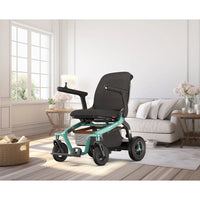

FreeRider Apollo II$4,000–$4,500 rangeBest for heavier riders and all-day sitting
See price and specs
Quick answer
- Check seat width and weight-capacity headroom before chair weight. Aim for a rating 25–30% above the rider's weight plus what they carry.
- Folding electric wheelchairs typically list 6–15 miles per charge and full-size chairs 12–20 miles. Plan on 60–70% of the listed figure in real use.
- For a lightweight electric wheelchair, judge the heaviest piece you lift. Around 40–50 lb is manageable for many people; heavier usually needs a caregiver or a lift.
- To fly, the chair needs a lithium-ion battery of 300 Wh or less (FAA). Lead-acid and AGM chairs need advance arrangements with the airline.
Best electric wheelchairs by use case
The best electric wheelchair depends on where it's used most: at home, in the car, on rough ground or all day. At Selected Comfort, we help riders and caregivers across the U.S. match the right chair to the right person. The picks below apply our founder Vineet Arora's four non-negotiables (fit, weight-capacity headroom, realistic range and U.S. service support) to the electric wheelchairs and power chairs in our collection, using specs from our product pages as of October 2026.
- Mostly at home: the Robooter E40. It folds in two steps and turns tightly enough for elevators and apartments. Its 20Ah lithium battery is listed at 14.3 miles.
- Daily indoor and outdoor use: the Robooter X40. It has dual suspension, omnidirectional wheels and cruise control, and folds itself hands-free. It lists about 15.5 miles (25 km) and a 265 lb rating, so it suits lighter riders.
- Car transport and caregivers: the Journey Air Elite. It weighs 26 lb without the battery, on a carbon fibre frame, folds tool-free and has a 10-mile range. For a heavier rider, the AirFlyer weighs 28.5 lb with a 300 lb rating and 14.9 miles.
- Grass and rough paths: the Robooter E60. It has 12-inch omnidirectional front wheels and coil front suspension, clears obstacles up to about 3 inches (8 cm), and is rated for about 330 lb (150 kg), with up to about 18.6 miles (30 km).
- Heavier riders and all-day sitting: the FreeRider Apollo II. It's rated for 470 lb, on a 21-inch swivel, reclining captain's seat. It's front-wheel drive, with 12 or 20 miles depending on the AGM battery.
- Tightest budget: the Journey Air, the lowest-priced chair in our range. It weighs 35 lb without the battery and is FAA-compliant. With a 6.2-mile range, it's best for short outings.
| Model | Type | Listed weight | Weight capacity | Listed range | Best for |
|---|---|---|---|---|---|
| Journey Air | Lightweight folding | 35 lb without battery | Not published | 6.2 mi | Budget, short trips |
| Journey Air Elite | Carbon fibre folding | 26 lb without battery | Not published | 10 mi | Car trunks, caregivers |
| AirFlyer | Carbon fibre folding | 28.5 lb | 300 lb | 14.9 mi | Travel, heavier folding-chair riders |
| Journey Zoomer | Folding, puncture-proof tires | Heaviest part 19 lb | Not published | 9+ mi | Mixed surfaces, easy lifting |
| Robooter E40 | Indoor folding | About 55 lb (25 kg) | Not published | 14.3 mi | Homes and apartments |
| Robooter X40 | Auto-folding, dual suspension | Not published | 265 lb | About 15.5 mi | Daily indoor and outdoor use |
| Robooter E60 | All-terrain folding | Not published | About 330 lb | Up to about 18.6 mi | Grass and rough paths |
| FreeRider Apollo II | Heavy-duty, full-size, front-wheel drive | 233 lb without batteries | 470 lb | 12 or 20 mi | Heavier riders, all-day use |
Swipe the table sideways on mobile. Specs from Selected Comfort product listings as of October 2026. "Not published" means the spec isn't on the listing yet; call us and we'll confirm it with the manufacturer.
What makes an electric wheelchair the right one?
The right electric wheelchair fits the rider, their routine and the people who help them. Vineet puts it simply:
"The specs I won't compromise on are seat width and fit, real headroom on weight capacity, a range that matches the rider's actual routine, and dependable U.S. service and parts support. Everything else comes after those four."
— Vineet Arora, Founder, Selected Comfort
Seat width and fit
Measure the rider's seated hip width at the widest point and compare it with the seat. In our range, seats run from 16 inches on the FreeRider Luggie Folding Power Chair to 21 inches on the Apollo II. Also check what makes transfers easier: flip-back armrests on the Journey Air, a swivel seat on the Apollo II.
Weight-capacity headroom
A chair run near its limit loses range and wears faster. Our working rule is a weight capacity 25–30% above the rider's weight, counting bags and anything else they carry. For heavier riders, Vineet treats about 50 lb of headroom as a conservative planning minimum, and he never recommends riding at or over the rating.
Realistic range
Listed range is measured in good conditions. In our experience with customers, riders get about 60–70% of the listed range in daily use, and less on hills, grass, in the cold or with a heavier rider.
Quick math
A 10-mile chair realistically covers 6 to 7 miles, and less on hills. If the rider's longest daily trip is 5 miles, look for a listed range of at least 7–8 miles.
Service support
The FDA classes a powered wheelchair as a Class II medical device (21 CFR 890.3860). Some folding chairs, including the Journey Air, Zinger and Zoomer, are sold as personal electric vehicles instead. Whichever you choose, ask who in the U.S. will repair it and supply parts, and read the written warranty.
Folding or full-size: which electric wheelchair should you buy?
Choose a folding power wheelchair when portability and car storage come first. Move to a full-size power wheelchair like the Apollo II when stability, higher capacity, comfort or frequent outdoor use matter more.
The Apollo II weighs 233 lb before its batteries go in, so it needs a ramp or a vehicle lift. The Journey Zoomer's heaviest part weighs 19 lb.
Wondering whether a power wheelchair and an electric wheelchair are the same thing? See power wheelchair vs electric wheelchair.
Vineet's rule
If the chair rides in a car most days, fold. If the rider sits in it all day, go full-size.
What counts as a lightweight electric wheelchair?
A lightweight electric wheelchair is one the person loading it can actually lift. Judge the heaviest single piece, not the total weight. In Vineet's experience, around 40–50 lb is manageable for many people to lift into a car; anything heavier usually needs a caregiver, a ramp or a lift. Weights are often listed without the battery, so add the battery's weight if it stays in the chair when you lift it.
In our range, the Journey Air Elite weighs 26 lb without its battery, the AirFlyer 28.5 lb and the Journey Air 35 lb.


AirFlyer Ultra-Light Carbon Fibre Electric Wheelchair$3,000–$3,500 range · financing available
28.5 lb, a 300 lb rating, 14.9 miles and an airline-approved lithium battery. Our pick when a heavier rider still needs a chair they can lift.
See price and specsElectric wheelchair features and configurations compared
Four configuration choices separate one chair from another: drive layout, battery, tires and suspension, and controls.
- Drive and wheel layout. Where the drive wheels sit changes how the chair turns and climbs (see the next section). Omnidirectional front wheels on the Robooter X40 and E60 let the chair move smoothly in more directions, which helps in hallways.
- Battery. Lithium keeps folding chairs light and is the battery type you need for flying. Heavier AGM batteries, like the Apollo II's, buy range at the cost of weight.
- Tires and suspension. Flat-free and puncture-proof tires (Journey Air, Air Elite, Zoomer) never go flat. Suspension (X40, E60) takes the sting out of cracked pavement and grass.
- Controls. Most chairs use a joystick, and on the Journey Air and Air Elite it switches sides. The Journey Zinger uses dual-lever steering instead and turns within 24 inches. Robooter chairs add app control.
Can you fly with an electric wheelchair?
Yes. Under FAA rules, a removed lithium-ion wheelchair battery can be up to 300 watt-hours (Wh) and must travel in the cabin. You can also carry one spare up to 300 Wh or two spares up to 160 Wh each, in carry-on only. If the battery stays installed and is protected by design, the chair is checked and you tell the airline where the battery is.
To find a battery's size, multiply volts by amp-hours. A 24V, 10Ah battery is 240 Wh (24 × 10). Under the Air Carrier Access Act, airlines can't charge for accommodations the rule requires, such as packaging for your battery. They may ask for up to 48 hours' notice to carry an electric wheelchair on an aircraft with fewer than 60 seats. Our air travel guide covers airline steps in detail.
Front, mid or rear-wheel drive: which is best?
Choose by where the rider spends most of their time. Front-wheel drive handles thresholds and getting close to tables well, mid-wheel drive turns tightest indoors, and rear-wheel drive is steadiest in a straight line outdoors.
- Front-wheel drive: the drive wheels pull the chair over small obstacles like door thresholds and uneven pavement, and let the rider pull close to tables and counters. The Apollo II is front-wheel drive with a 21-inch turning radius. It can feel different to steer at first, because most of the chair is behind the rider.
- Mid-wheel drive: the drive wheels sit under the seat, so the chair turns close to its own center. It's the strongest choice for tight homes and crowded indoor spaces, and it can find larger curbs harder.
- Rear-wheel drive: the chair pushes from behind. It tracks steadily in a straight line and suits riders who cover more ground outdoors, but it needs more room to turn indoors.
Vineet's rule
If most of the rider's day is indoors, put turning radius first. If most of it is outdoors, put drive power, ground clearance and suspension first.
Electric wheelchair specs explained
Spec sheets make more sense once you know what a normal number looks like. Here's what each common spec means and what to check against the rider's routine.
| Spec | What it means | What to look for |
|---|---|---|
| Listed range | Miles per charge in good conditions. Our chairs list 6.2 to 20 miles. | Plan on 60–70% of the listed figure. Pick a chair whose listed range clears the rider's longest day with margin. |
| Weight capacity | The most the chair is rated to carry, rider plus bags. | 25–30% above the rider's weight. Never ride at or over the rating. |
| Turning radius | The space the chair needs to turn around. Smaller is easier indoors. | Around 21–24 inches handles most apartments (Apollo II 21", Zinger 24"). Measure your tightest hallway turn. |
| Incline rating | The steepest slope the chair is rated to climb, in degrees. | 6° is about a 10.5% grade, 8° about 14%, 10° about 17.6%, 12° about 21%. The Apollo II is rated for 6°. |
| Top speed | Maximum speed on flat ground. | Our chairs list about 3.7 mph (X40) to about 6.2 mph (E60); the Apollo II lists 4 mph. Faster isn't safer in crowds. |
| Ground clearance | Gap between the lowest part of the chair and the ground. | Matters for thresholds, curbs and grass. The Apollo II lists 5 inches; the E60 clears obstacles up to about 3 inches. |
| Battery | Lithium-ion (light, flyable) or AGM (heavier, more range per dollar). | For flying, lithium-ion at 300 Wh or less. Wh = volts × amp-hours. |
| Seat width | Width of the seat between the armrests. | Compare with the rider's seated hip width. Our seats run 16 to 21 inches. |
Incline grades are calculated from the degree rating. Chair specs from Selected Comfort product listings as of October 2026.
Best electric wheelchair for seniors and home use
The best electric wheelchair for home use is one that turns within your hallways and fits through your doorways. The Zoomer fits through 25-inch doorways, and the Robooter E40 is built for apartments and elevators. In Vineet's experience, homes with only about 30–32 inches of usable doorway or turning clearance strongly favor a compact chair.
Pro tip
Measure your narrowest doorway and tightest turn before you order.
For the best electric wheelchair for seniors, look for easy transfers, simple controls and safety features:
- Flip-back or fold-up armrests
- A joystick on the rider's stronger side
- Automatic electronic braking when the joystick is released (the Air Elite has this)
- Rear anti-tip wheels
- Adjustable speed, so the rider can start slow indoors

Power chair or mobility scooter?
Choose a power chair when maneuverability, compact turning or seated joystick control is the priority. For the full comparison, read power wheelchair vs mobility scooter. Vineet recommends a scooter when the rider benefits from tiller steering, longer outdoor trips and easier dismounting. A scooter's tiller needs both hands and steady grip, so riders with significant tremors, weak grip or weak shoulders are usually better in a joystick-driven chair.
Browse both in our power chair and mobility scooter collections, or see our scooter guide for elderly users.
Smart and standing chairs: who needs them?
App control and standing functions make sense for tech-comfortable riders who specifically need them. The Robooter XZ-Droid raises the rider to a standing position and can be driven from a phone app. It sits in the $11,000–$12,000 range. Read our standing wheelchair guide before choosing one.
Vineet's advice: most buyers should get fit, stability, range and service right before paying for specialist features.
When does a tracked wheelchair make sense?
A tracked wheelchair runs on rubber tracks instead of wheels. It makes sense when the rider's goal is ground no wheeled chair can cover: sand, snow, mud, woods or farmland.
Trackchair says its chairs handle sand, mud and snow, and can drive through water up to 10 inches deep. Its models are listed from about $13,800 to $27,600.
Watch out
Tracked chairs are often 30 inches wide or more, too wide for most doorways. A tracked chair is usually an outdoor addition to an everyday chair, not a replacement.
Selected Comfort doesn't sell tracked chairs. For grass and rough paths, the Robooter E60 is our all-terrain option; our best all-terrain electric wheelchair guide compares it in detail.

Robooter E60 All-Terrain Electric Wheelchair$3,500–$4,000 range · financing available
12-inch omnidirectional front wheels, coil suspension, about 330 lb capacity and up to about 18.6 miles, and it still folds for the car.
See price and specs
Common mistakes electric wheelchair buyers make
Most buying mistakes come from choosing on one headline number instead of the whole picture.
Avoid
Buying on advertised chair weight alone. The lightest chair often has a narrower seat, a smaller battery and a lower weight rating. Check fit and capacity first, then weight.
Ignoring seat dimensions and capacity headroom. A narrow seat causes pressure and discomfort. Compare seat width with the rider's hips, and the rating with their weight plus what they carry.
Trusting the listed range. Real range is usually 60–70% of the brochure figure. A chair that only just covers the rider's day on paper will fall short in practice.
Skipping the transport, battery and service check. Work through the questions below before you buy.
- Confirm how the chair gets into the car, and weigh the heaviest piece someone will lift.
- Check whether the battery can fly: lithium-ion, 300 Wh or less.
- Ask what a replacement battery costs.
- Find out who supplies parts and service in the U.S.
Electric wheelchair price: what each budget gets you
An electric wheelchair costs about $2,000 to $5,000 for most buyers in our range, and around $12,000 for a smart standing chair. What you pay depends on the job the chair has to do.
| Budget band | What you get | Examples in our range |
|---|---|---|
| $2,000–$3,000 | Lightweight folding chairs for short trips, homes and car transport | Journey Air, Journey Air Elite, Robooter E40 |
| $3,000–$4,000 | Carbon fibre, auto-folding, all-terrain and Luggie chairs | AirFlyer, Robooter X40, Robooter E60 |
| $4,000–$5,000 | Full-size chairs with higher capacity and a captain's seat for all-day use | FreeRider Apollo II |
| Around $12,000 | Smart standing chair with app control | Robooter XZ-Droid |
Approximate price bands across the Selected Comfort range as of October 2026.

Journey Air Lightweight Folding Power Chair$2,000–$2,500 range · financing available
The lowest-priced chair in our range: 35 lb without the battery, FAA-compliant and a 6.2-mile range for short outings.
See price and specsFor heavier riders, our heavy-duty power wheelchair guide goes deeper on capacity and seat fit. Our power wheelchair cost guide explains what drives each band. If you find the same model for less from another authorized online retailer, our Price Match Guarantee covers it. Financing is also available.
Your electric wheelchair buying checklist
Use this checklist before you compare models, and you'll narrow the field fast.
Before you buy
- The rider's seated hip width and weight, plus what they carry
- Their longest daily trip, and the steepest slope on it
- The ground they cover: carpet, pavement, grass or gravel
- Your narrowest doorway and tightest turn
- How the chair travels, who lifts it and where it's stored
- Whether the rider will fly with it
Key takeaways
Key takeaways
- Fit and weight-capacity headroom (25–30% above the rider) matter more than chair weight.
- Plan on 60–70% of the listed range; folding chairs typically list 6–15 miles, full-size chairs 12–20.
- Judge a lightweight electric wheelchair by its heaviest piece; 40–50 lb is manageable for many people.
- Front-wheel drive suits thresholds and tables, mid-wheel drive tight homes, rear-wheel drive open outdoor ground.
- To fly, choose lithium-ion at 300 Wh or less; check Wh = volts × amp-hours.
- Expect to pay about $2,000–$5,000 for most chairs, and make sure U.S. parts and service are behind it.
The bottom line
Start with the rider, not the brochure. Get seat width, capacity headroom, realistic range and U.S. service right, and most of the decision makes itself.
If the chair travels in a car most days, pick a folding model like the Journey Air Elite or AirFlyer. If the rider sits in it all day or needs more capacity, choose a full-size chair like the Apollo II.
Not sure which electric wheelchair fits you?
Tell us about the rider and their routine, and we'll help you match the right chair. Free shipping in the USA, with financing available.
Frequently asked questions
What is the best electric wheelchair?
The best electric wheelchair fits the rider's hips, carries their weight with 25–30% headroom, covers their real daily distance and has U.S. parts and service behind it. For most homes that's a folding chair like the Robooter E40; for heavier riders or all-day use, it's a full-size chair like the FreeRider Apollo II.
Is a power wheelchair the same as an electric wheelchair?
In everyday use, yes. The legal difference is between powered wheelchairs, which the FDA regulates as Class II medical devices, and some folding chairs sold as personal electric vehicles, so check the listing before you buy.
What is the best power chair for travel?
The best power chair for travel is light, folds without tools and has a lithium-ion battery of 300 watt-hours or less, which the FAA allows in the cabin once removed. The Journey Air Elite (26 lb without battery) and the AirFlyer (28.5 lb, airline-approved battery) are our lightest. See our air travel FAQs for airline steps.
How far does an electric wheelchair go on one charge?
Most folding electric wheelchairs list about 6 to 15 miles per charge, and full-size power chairs with larger batteries list about 12 to 20 miles. Plan on 60 to 70% of the listed figure in real use, and less on hills, grass, in the cold or with a heavier rider. In our range, listed figures run from 6.2 miles (Journey Air) to 20 miles (Apollo II with 50Ah batteries).
What is the lightest electric wheelchair?
The lightest folding electric wheelchairs weigh under 30 lb without the battery. In our range, the Journey Air Elite weighs 26 lb without its battery and the AirFlyer weighs 28.5 lb. When comparing, check whether the listed weight includes the battery and how heavy the heaviest piece you lift will be.
What is the best electric wheelchair for heavy people?
Choose a chair rated 25–30% above the rider's weight, with a seat at least as wide as their seated hips. In our range, the FreeRider Apollo II is rated for 470 lb with a 21-inch swivel seat. Among folding chairs, the Robooter E60 is rated for about 330 lb and the AirFlyer for 300 lb.
Does Medicare cover an electric wheelchair?
Medicare Part B may cover a power wheelchair when it's medically necessary for use in the home. According to Medicare.gov, you need a face-to-face exam, a written order and a Medicare-enrolled supplier. Medicare sorts power wheelchairs into groups: most standard chairs fall under Group 2, while Group 3 chairs with power seating options need extra clinical documentation. Selected Comfort isn't a Medicare-enrolled supplier.
Vineet Arora is the founder of Selected Comfort, a U.S. retailer of mobility scooters, power chairs, patient lifts and home wellness equipment. For help matching a chair to a rider, call +1 888-905-6858 or email sales@selectedcomfort.com.
Sources
- FAA: Airline Passengers and Batteries
- U.S. DOT: Passengers with Disabilities (Air Carrier Access Act)
- eCFR: 21 CFR 890.3860 Powered wheelchair
- Medicare.gov: Wheelchairs & scooters coverage
- CMS: Power wheelchair group codes (DMEPOS prior authorization list)
- Trackchair: Tracked all-terrain wheelchairs
- Selected Comfort power chair product listings (specs as of October 2026)
Still comparing? See what real buyers said about ordering from Selected Comfort, then talk to a specialist before you spend a dollar.